Coronary Artery Stenting in Baytown, TX
A coronary artery stent is commonly used to restore healthy blood flow when the arteries supplying the heart become narrowed or blocked. At Houston Cardiovascular Institute, patients receive expert care in Baytown for blocked heart arteries using minimally invasive catheter-based techniques.
Treatment focuses on relieving symptoms such as chest pain and shortness of breath while reducing the risk of serious cardiac events, including heart attack.
What Is Coronary Artery Stenting?
A coronary stent procedure is performed to reopen a narrowed heart artery and support long-term blood flow to the heart muscle. The stent itself is a small mesh tube that remains in place after treatment to prevent the artery from collapsing or narrowing again. Stents are placed using catheter-based techniques rather than open surgery, making this an effective option for many patients with coronary artery disease.
How Coronary Artery Disease Affects the Heart
Coronary artery disease develops when plaque, composed of fat, cholesterol, and inflammatory material, builds up inside the arteries. As these deposits grow, blood flow to the heart becomes restricted.
Reduced circulation can cause chest discomfort, pressure, fatigue, or shortness of breath, particularly during physical activity. In more advanced cases, severe blockage may lead to a heart attack. Treating the blockage early can help protect heart function and improve quality of life.
Benefits of Treating Blocked Heart Arteries With a Stent
For appropriately selected patients, stent placement offers meaningful advantages. Restoring circulation can quickly reduce chest pain and improve exercise tolerance. Because the procedure is minimally invasive, recovery is typically faster than with surgical options. Many patients are able to resume daily activities within days while continuing long-term medical management for heart health.
Who May Benefit From Coronary Artery Stent Placement?
Patients may be candidates for coronary artery stent treatment if imaging shows significant narrowing of a heart artery and symptoms persist despite medication or lifestyle changes. Stents are commonly used in patients with:
- stable angina
- unstable chest pain, or
- certain types of heart attack
Final recommendations are based on diagnostic testing, overall health, and individual risk factors. If you’re unsure of your symptoms, contact Houston Cardiovascular Institute today to book an appointment with Dr. Shehzad Sami.
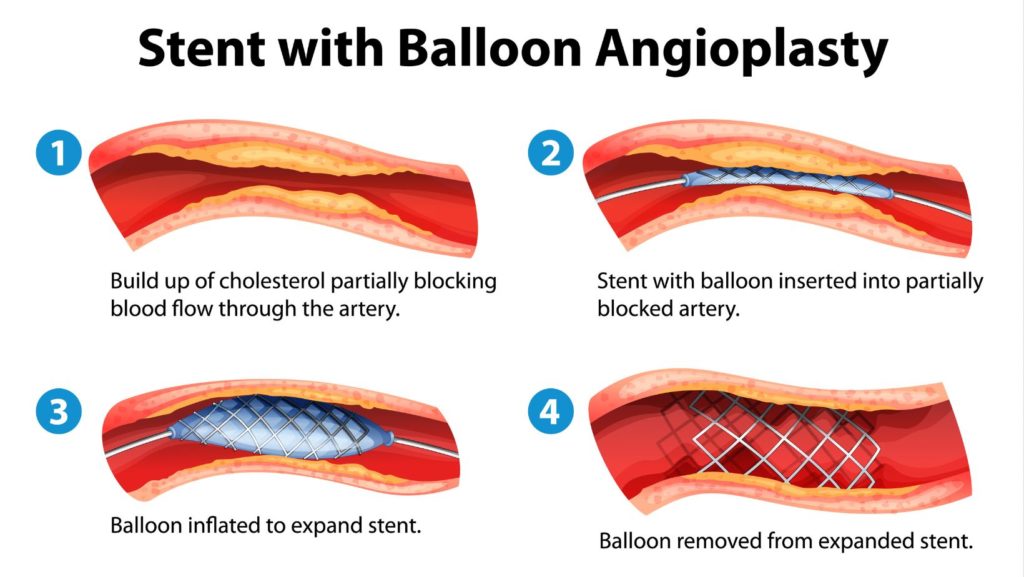
How a Coronary Stent Procedure Is Performed
Coronary stent procedures begin with imaging to identify the location and severity of the blockage. A thin catheter is guided through an artery in the wrist or groin and advanced to the heart, where contrast dye is used to produce detailed X-ray images of the coronary arteries.
Once the narrowed area is identified, a small balloon is positioned at the site and gently inflated to widen the artery and restore blood flow. After the artery is opened, a stent mounted on a balloon is expanded into place. The stent remains in the artery to support the vessel walls and help keep the artery open after the catheter is removed.
Recovery and Aftercare Following Stent Placement
After the procedure, patients are monitored while the access site heals. Mild soreness or bruising may occur. Most patients return home the same day or after an overnight stay. Medications such as antiplatelet therapy are prescribed to support healing and reduce the risk of future blockage. Activity is gradually increased over the following days under medical guidance.
When Patients Notice Improvement
Improved blood flow occurs immediately after treatment. Many patients experience reduced chest pain and better stamina within a short time. Ongoing improvement continues as the heart muscle receives a consistent oxygen supply and inflammation decreases.
Professional and Friendly
“The Staff was very professional and friendly, They made sure all my questions were answered concerning my Insurance and all proper Lab work that was needed for my visit. Dr Sami answered all my questions and explained everything that needed to be done. I recommend him for your Cardiovascular needs.”
 How Much Is Coronary Stent Treatment in Baytown
The cost of coronary artery stent treatment varies based on the number of arteries treated, procedural complexity, hospital fees, and insurance coverage. A personalized estimate is discussed during consultation, after diagnostic testing is complete, allowing patients to understand their options before treatment.
Why Choose Houston Cardiovascular Institute
When you choose Houston Cardiovascular Institute, you receive care guided by experience, precision, and clear communication. Your treatment is led by Dr. Shehzad Sami, a multi-board-certified cardiologist with advanced training in interventional heart procedures.
From your first visit through follow-up care, we take the time to explain your condition, review your options, and answer your questions so you can make informed decisions about your heart health. Serving patients from Baytown, Mont Belvieu, and Dayton, we focus on safety, efficiency, and personalized care.
Schedule a consultation today and take the first step toward relief and long-term cardiovascular health.
Coronary Artery Stenting FAQs
Stents are designed to remain in place permanently and function effectively with proper follow-up care.
Most patients feel little discomfort. Local anesthesia and sedation are used to maintain comfort.
Many patients resume light activities within a few days, depending on overall health and job demands.
As with any medical procedure, there are risks; however, stent placement is widely performed and considered safe when performed by an experienced interventional cardiologist.
Start With a Heart Health Consultation
Chest discomfort, shortness of breath, or concern about blocked arteries deserve careful attention. A heart health consultation allows you to discuss symptoms, review testing, and understand your options with an experienced cardiology team.
Talk with a heart specialist—book an appointment with Dr. Sami today.
Related Blogs
Types of Cardiac Arrhythmias
A normal healthy heart beats 60 to 100 beats per minute. An irregular beat is known as cardiac arrhythmias. Heart rates that are above or below the normal range are not considered arrhythmia. Irregular heartbeat and heart rate are …
Wearing a Mobile Cardiac Telemetry System Helps Record Cardiac Events
A cardiac event recorder is a portable, battery-powered device that you can control to tape-record the ECG readings of the electrical activity of your heart, especially when you are experiencing heart-related problems …
For Long-Term Recording of Data About Your Heart, We Offer the Holter Monitor
When you have irregular heartbeats or other heart conditions like Arrhythmia, where your heart seems to skip a beat, rapidly races, or works a bit too slow, you might be advised to …
Related Pages